
Is your PPE clean?
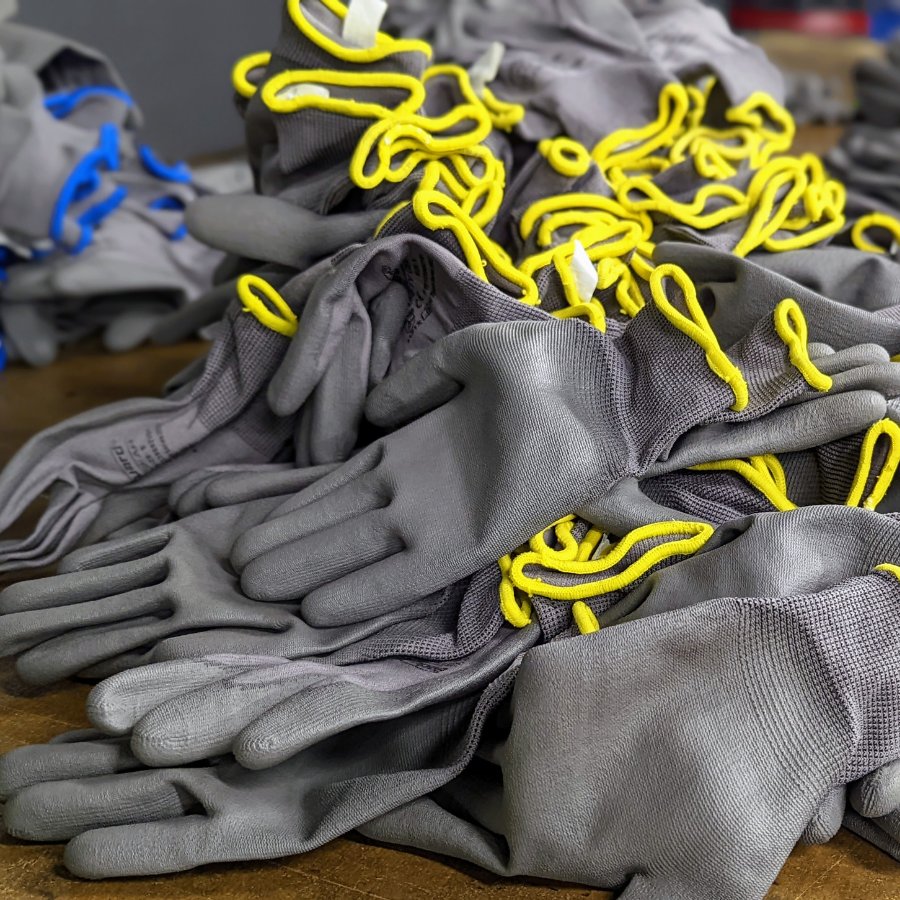
As published in Safety+Health, November 2026. Reprinted with permission of the National Safety Council.
Q: Our plant is considering laundering and reusing personal protective equipment such as gloves and sleeves, rather than discarding them. How do we verify that laundered PPE is clean and safe to return to service?
Responding is Jeff Huelskoetter, managing partner, Closed Loop Recycling, St. Louis.
Before answering, it helps to name the standard you’re comparing against. Most plants already reuse gloves. A worker is issued a pair, wears them for four or five days, checks them each morning and decides they’re fine. That decision is made by eye, on visibly soiled gloves, with no testing behind it. This is the accepted protocol across the industry – not a lapse at any one facility.
It’s also a protocol nobody validates mid-life. Cut ratings are rarely retested on the third day of use. Gloves are rarely swabbed after the second day. The rating printed on the cuff was verified once, when the glove was new, and is assumed to hold for the rest of its service life. Almost no facility issues a fresh pair daily, and they shouldn’t. Gloves are built to last years. Discarding them after one shift would be expensive and genuinely wasteful, sending them to a landfill or incineration with most of their useful life intact.
So, the real question isn’t whether reused PPE can be verified. It’s whether you want the reuse you’re already doing to be verified.
Does it still protect?
This is the test people assume laundering will fail. Our multiple independent tests on gloves put through five laundering cycles showed no loss of cut rating. Cut performance is classified under ANSI/ISEA 105, and the testing is straightforward to commission against your own glove models, rather than a generic sample.
Is it actually clean?
Testing consistently shows dirty gloves carry substantially more bacteria than laundered ones. Laundered gloves have tested cleaner than gloves straight out of the box. That second finding surprises people, and it’s the one worth sitting with. The clean standard most facilities imagine they’re meeting is a new glove, and a new glove isn’t sterile.
Validate against your own contaminants, not general soil. Residual oil testing gives you a number. Plate counts give you a microbial baseline. Sample on a schedule, not once at startup.
What to keep
Inspection and rejection criteria your people and your launderer can apply without judgment calls: pinholes, thinning palms, seam separation, cracked coating and stiffness. Keep the test results and the rejection rates. An auditor will ask how you know, not whether you believe it. Verification is available in this category. It just hasn’t been the norm, and it can be.
Read the original in Safety+Health’s Workplace Solutions column.